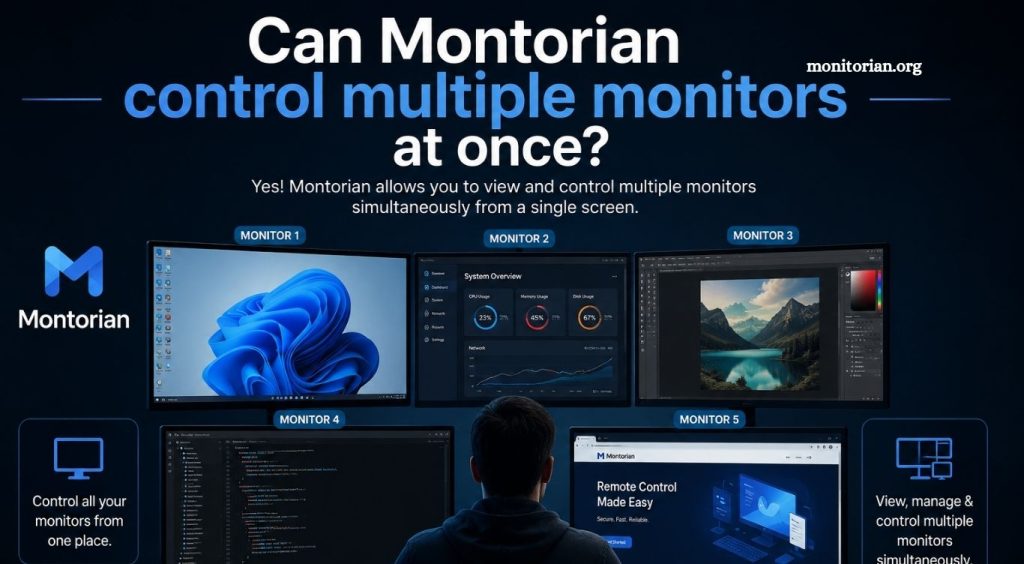
Multi-monitor setups have become common among professionals, gamers, content creators, developers, and remote workers. Managing several displays efficiently can improve productivity and create a smoother workflow. This raises an important question: Can Montorian control multiple monitors at once?
The short answer depends on Montorian’s available features, operating system support, and display configuration. If Montorian includes multi-display management capabilities, users may control and organize several connected monitors from a centralized interface.
This article explains how multiple monitor control may work with Montorian, key requirements, possible limitations, and useful setup tips.
What Is Montorian?
Montorian is associated with monitor control and display management functionality. Monitor management tools usually help users adjust display-related settings without repeatedly using physical monitor buttons.
Depending on software support and monitor compatibility, common controls may include:
- Screen brightness adjustment
- Contrast management
- Display selection
- Monitor detection
- Individual screen configuration
- Quick display setting changes
Multi-monitor support becomes especially useful when two, three, or more displays form part of a single workstation.
Read More: Does Montorian work on Windows 11?
Can Montorian Control Multiple Monitors at Once?
Yes, Montorian may control multiple monitors at once if connected displays and system configurations support the required monitor communication features.
Compatible monitor control software generally detects connected displays separately. Users can then select a specific monitor and change available settings. Some configurations may also allow similar adjustments across several displays.
However, simultaneous monitor control depends on hardware compatibility, connection type, operating system permissions, and Montorian’s supported features.
Not every monitor provides identical software-based controls. One display may support brightness adjustment, while another may offer limited control options.
How Does Montorian Detect Multiple Monitors?
Monitor management applications usually communicate with connected displays through supported display protocols. A common technology used for software-based monitor control is DDC/CI (Display Data Channel/Command Interface).
DDC/CI allows compatible software to send commands directly to a monitor. These commands may control brightness, contrast, input selection, and other supported settings.
When multiple monitors connect to a computer, Montorian may identify each supported display individually. Users can potentially manage each detected monitor through the software interface. Monitor names, numbers, or display identifiers may help users distinguish between connected screens.
Requirements for Controlling Multiple Monitors
Several requirements can affect successful multi-monitor control with Montorian:
Compatible Monitors
Connected monitors must support software-based display commands. DDC/CI support plays an important role in many monitor control applications.
Check monitor settings because DDC/CI may need manual activation through the monitor’s on-screen menu.
Supported Display Connections
HDMI, DisplayPort, and USB-C connections may support monitor communication. Compatibility can vary based on monitor models, graphics hardware, docking stations, and adapters.
Some converters or inexpensive adapters may block display control commands.
Correct System Configuration
The operating system must properly detect every connected monitor. If a display does not appear in the system display settings, Montorian may also struggle to identify it.
Updated Graphics Drivers
Outdated graphics drivers can cause display detection or communication problems. Keeping GPU drivers updated may improve multi-monitor compatibility.
Montorian Software Support
Available controls depend on the Montorian version and supported functionality. Updated software versions may provide improved display detection, compatibility, and performance.
Can Montorian Adjust All Monitor Brightness Levels Together?
This capability depends on Montorian’s control options.
- Some monitor management tools allow users to change brightness for every compatible monitor through one interface. Other tools require individual adjustments for each display.
- Even when several monitors appear inside Montorian, brightness levels may not look identical at the same percentage. Different panel technologies, manufacturers, color profiles, and backlight systems can produce noticeable brightness differences.
- For example, 50% brightness on one monitor may appear brighter than 50% on another display. Users may need to create visually balanced brightness levels manually.
Can Montorian Control Monitors Individually?
Individual monitor control is an important feature for multi-display users. If Montorian recognizes each monitor separately, users may select a specific display and modify supported settings.
For example, a user could keep the primary monitor brighter while reducing brightness on secondary screens. This configuration can improve visual comfort during long working sessions. Individual control also helps users working with monitors from different brands or product generations.
Benefits of Using Montorian With Multiple Monitors
Controlling several monitors through software offers several advantages.
- Improved Productivity
- Centralized monitor controls reduce time spent navigating physical monitor menus. Users can manage display settings directly from their computers.
- Better Eye Comfort
- Different lighting conditions require different screen brightness levels. Quick adjustments can reduce excessive glare and improve viewing comfort.
- Consistent Display Experience
- Users can manually balance multiple displays for a more consistent visual environment.
- Easier Workspace Management
- Professionals using three or four displays can manage compatible screens without reaching for monitor buttons.
- Faster Display Adjustments
- Software controls can make brightness and other supported setting changes faster during daily work.
Why Is Montorian Not Detecting Multiple Monitors?
Several issues may prevent Montorian from detecting every connected display.
- DDC/CI is disabled: Open the monitor’s built-in settings and enable DDC/CI if available.
- Unsupported adapter: Certain HDMI converters, docks, or display adapters may prevent control commands from reaching a monitor.
- Driver problems: Update graphics drivers and restart the computer.
- Monitor limitations: Some displays do not support software-based brightness or contrast controls.
- Connection problems: Reconnect display cables and verify that every monitor appears in the operating system display settings.
- Software issues: Restart Montorian or install an updated version when available.
Testing monitors individually can help identify which display or connection causes the problem.
Does Montorian Work With Different Monitor Brands?
Multi-brand monitor control depends primarily on communication support rather than brand names. A workstation may include monitors from Dell, LG, Samsung, ASUS, Acer, or other manufacturers. If connected displays support required control protocols, Montorian may recognize and manage them.
Available settings can still vary between monitor models. One display may support several controls, while another only allows basic brightness adjustment. Users should check individual monitor specifications for DDC/CI or external display control support.
Tips for Better Multi-Monitor Control
Use direct DisplayPort, HDMI, or USB-C connections whenever possible. Enable DDC/CI on every compatible monitor. Keep graphics drivers updated and avoid unnecessary display converters. Users should also test each monitor separately before creating a complete multi-display setup. This approach makes compatibility problems easier to identify.
Matching monitor models can provide a more consistent brightness and color experience, although identical displays remain optional.
Is Montorian Good for Multi-Monitor Setups?
Montorian can be useful for multi-monitor environments when connected displays support software-based controls. Centralized display management may simplify brightness adjustments and reduce dependence on physical monitor buttons.
Compatibility remains the most important factor. Monitor hardware, connection methods, adapters, and system configuration can influence available controls. Users managing several displays should verify monitor communication support before expecting identical functionality across every screen.
Conclusion
Montorian can simplify multiple monitor management by providing convenient display controls from one place. Compatibility depends on monitor support, DDC/CI functionality, and connection type. With proper setup, users can adjust supported settings, manage individual displays, and create a smoother multi-monitor workflow. For professionals using several screens, Montorian offers a practical way to improve display control and overall productivity.